The Zombie ZIP vulnerability identified as CVE-2026-0866, is a newly discovered cybersecurity flaw that allows malicious files to bypass traditional antivirus detection mechanisms. This vulnerability exploits the way compressed ZIP archives are structured, enabling attackers to hide malware in a format that appears harmless during scanning. As a result even advanced endpoint security solutions may fail to detect the embedded threat, creating a serious risk for individuals and organizations.
The ability of this vulnerability to avoid detection on a variety of antivirus platforms makes it especially dangerous. Security researchers have discovered that carefully constructed ZIP files may change directory structures and file headers, fooling scanning engines into ignoring malicious payloads. This raises the risk of successful cyberattacks, such as ransomware infections, data breaches, and unauthorised system access, particularly in settings where automated malware detection is crucial.
Technical Breakdown: How Zombie ZIP Evades Antivirus Systems
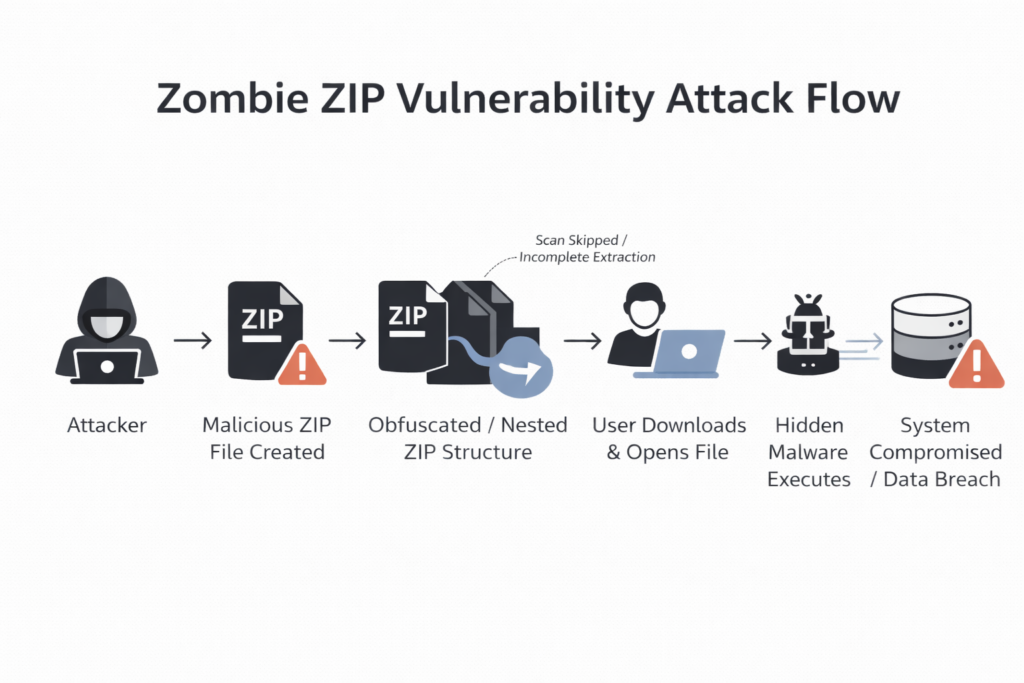
Technically speaking the Zombie ZIP vulnerability operates by taking advantage of variations in the way various security tools analyse ZIP file formats.Antivirus software confuses the content of compressed files created by attackers with duplicate or misleading metadata.The hidden payload can run once it is extracted or processed by the system and resulting in complete compromise even though the file might appear clean during analysis.
In phishing campaigns and malicious downloads where users accidentally interact with infected ZIP files this method works very well.Once opened the payload might spread ransomware, keyloggers, or remote access trojans without setting off any alerts. This vulnerability greatly expands the attack surface and highlights the shortcomings of signature-based detection systems today. cybersecurity since many organisations rely upon compressed files for file sharing and backups.
Effective Defense Strategies Against Antivirus Bypass Attacks
To defend against the Zombie ZIP vulnerability, organizations must move beyond traditional antivirus solutions and adopt a layered security approach. This includes implementing advanced threat detection systems such as behavior-based analysis, sandboxing, and zero-trust security models. These technologies can identify suspicious activity even when the malware is hidden within seemingly legitimate files reducing the risk of successful exploitation.
Patch management and routine security updates are also essential for reducing this risk. Users should make sure that all software that handles compressed files is up to date and stay away from downloading ZIP files from unknown sources. Additionally, preventing phishing-based delivery methods is greatly aided by cybersecurity awareness training. Organisations may drastically reduce their exposure to sophisticated threats like CVE-2026-0866 by combining technical defences with user education.