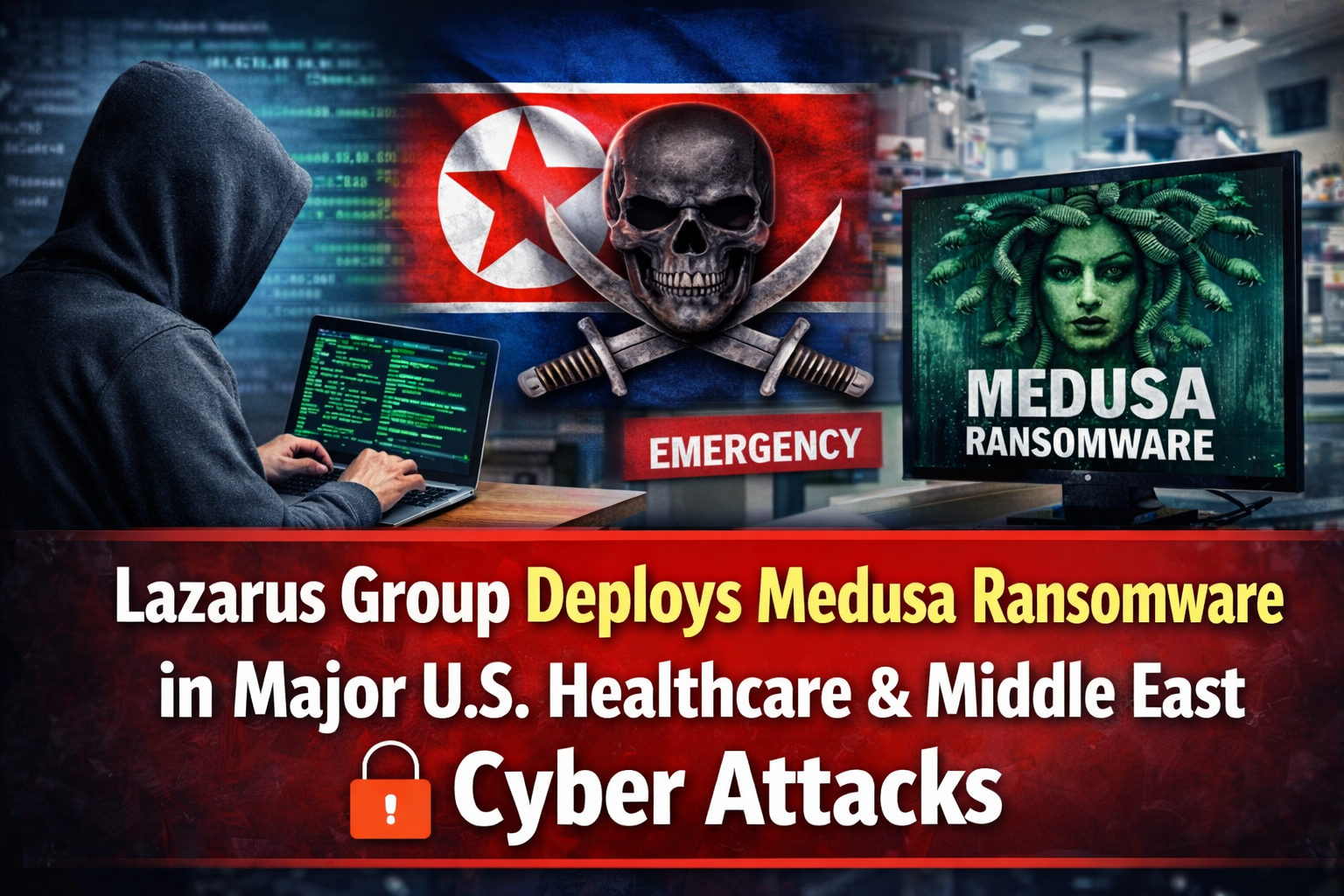
In a major escalation of state-sponsored cyber warfare and ransomware attacks. the notorious North Korean hacking collective Lazarus Group has been linked to the deployment of Medusa ransomware against targets in the Middle East and the U.S. healthcare sector.
According to fresh cybersecurity intelligence reports released on February 24, 2026 threat researchers confirmed that Lazarus operatives blended nation-state espionage tactics with financially motivated ransomware operations, signaling a dangerous evolution in global cybercrime.This development significantly raises the risk level for critical infrastructure cybersecurity, healthcare data protection, and enterprise ransomware defense strategies worldwide.
Lazarus Group’s Shift from Cyber Espionage to High-Value Ransomware Attacks
The Lazarus Group, a North Korean state-backed Advanced Persistent Threat (APT) has long been associated with large-scale cyber operations, financial theft, and disruptive cyberattacks. Historically tied to government-directed espionage campaigns and multimillion dollar and cryptocurrency thefts, The group is now increasingly leveraging Ransomware-as-a-Service (RaaS) platforms for rapid financial gain.
Medusa Ransomware: A High-Profit Cyber Extortion Tool
Medusa ransomware, launched around 2023 operates under a double-extortion model:
- Encrypts critical systems and enterprise data
- Exfiltrates sensitive information
- Threatens public data leaks if ransom payments are not made
Recent statistics indicate hundreds of global victims including hospitals,non-profits,and specialized medical institutions. Average ransom demands reportedly exceed $250,000, with some negotiations escalating significantly higher depending on the organization’s size and sensitivity of data.
Confirmed 2026 Attack Details
Cybersecurity investigations reveal:
- Successful Medusa ransomware deployment against a Middle Eastern organization
- Attempted but unsuccessful ransomware attack on a U.S. healthcare provider
- Target focus on healthcare due to high-pressure environments and critical patient operations
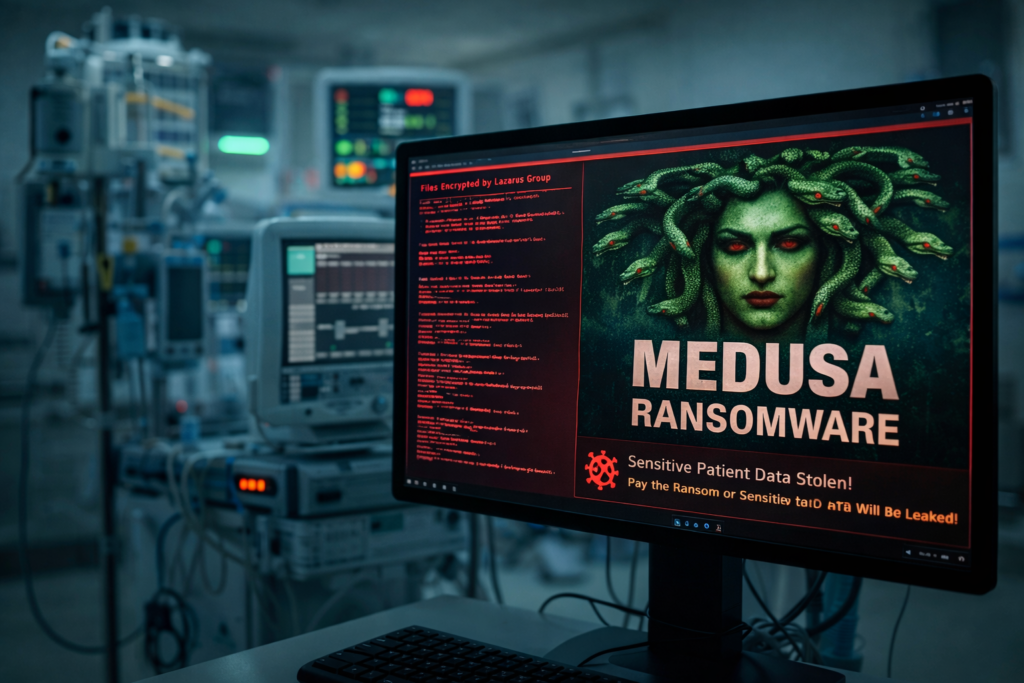
Why This Cybersecurity Threat Is Critical for Global Infrastructure
Lazarus Group’s recent push to weaponise Medusa ransomware marks a hard new chapter in the cyber‑war playbook. For the first time, a state‑backed cell is blurring the line between black‑market bill‑hunting and deliberate geopolitical pressure.
Ransomware has long been a “rob‑the‑money” scheme, but that’s changing. Now it doubles as a low‑cost, high‑impact weapon that can cripple essential services without ever detaching itself from politics. Think hospitals, power grids, even transportation hubs: a single hit can hold operations hostage, delay surgeries, and force emergency rooms into a scramble.
The stakes in healthcare alone are staggering. One breach can shutter operating rooms, disrupt ambulance dispatch, and release millions of private health records into the ether. The fallout isn’t just legal penalties or record‑keeping headaches—there’s reputational damage, costly incident‑response budgets, and, more importantly, a real threat to patient safety.
With attacks on medical facilities climbing worldwide, cyber resilience can’t be an extra measure it’s become essential for a company’s survival and for public trust. What was once a niche financial crime is now a strategic tool one that demands proactive layered defense, community wide awareness, and a fundamentally different mindset toward how we protect our digital infrastructure.
Final Analysis: The Future of State-Sponsored Ransomware
The Lazarus-Medusa connection confirms a dangerous global trend the merger of geopolitical cyber operations and profit-driven ransomware attacks.As cybercriminal ecosystems mature and nation-state actors collaborate with or adopt RaaS platforms the line between cyber warfare and organized cybercrime continues to blur.For healthcare organizations, government agencies and enterprise security teams 2026 is shaping up to be a defining year for ransomware defense strategy.
Cyber resilience today may determine operational survival tomorrow.