In the ever envolving landscape of cyber warfare a critical vulnerability has emerged underscore the relentless nature of state-sponsored threat actors. New intelligence confirms that APT28 the notorious Russian-backed hacking group (also known as Fancy Bear or Strontium) actively exploited a zero-day flaw in Microsoft MSHTML Framework (CVE-2026-21513) before the critical fix was released on February 10, 2026, Patch Tuesday.
What is CVE-2026-21513? The MSHTML Zero-Day Explained
A security flaw known as CVE-2026-21513 bypasses protective measures and is rated highly severe at 8.8 on impact scales. This vulnerability resides within the longnstanding MSHTML system which is responsible for displaying content across parts of Windows. That framework supports core components such as the desktop interface, as well as certain tools inside Microsoft Office applications.
The critical flaw?
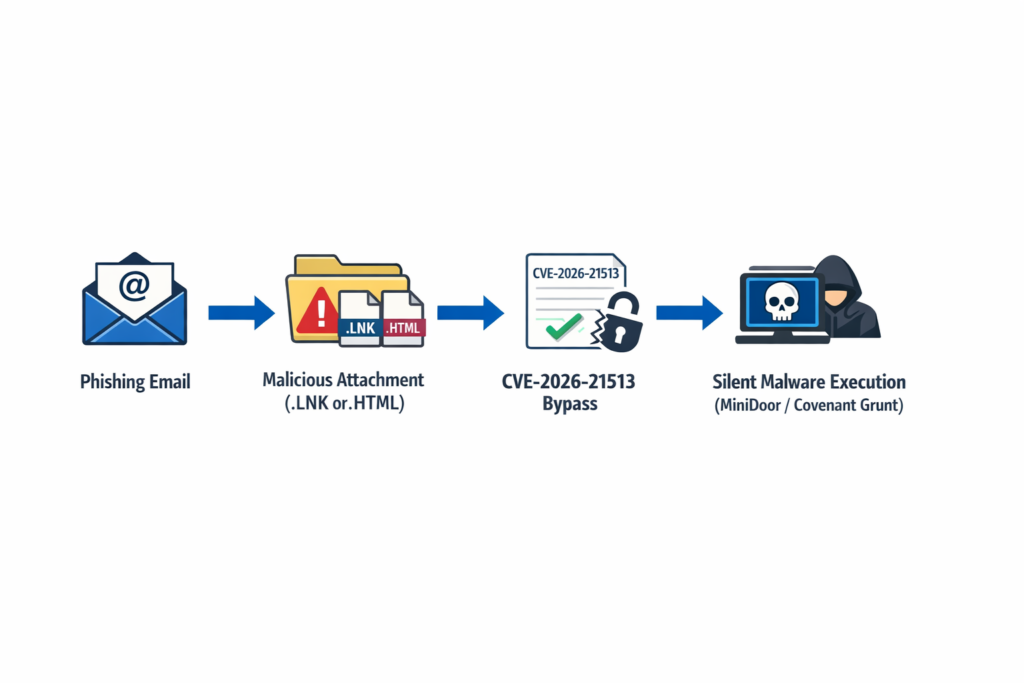
This flaw let hackers bypass key safety alerts meant to stop people from launching risky websites or downloading unsafe files. Picture clicking a document, then watching your device run damaging software no warning nothing. That was the risk hiding in this weakness.
Who is APT28 (Fancy Bear)?
APT28 is one of the most prolific and dangerous state-sponsored hacking group globally. Attributed to Russia’s GRU (Main Intelligence Directorate) its activities frequently aligns with Russian geopolitical interests. Its targets typically include:
- Government entities
- Military and defense organizations
- Journalists and media outlets
- Political organizations
- Critical infrastructure
Their history includes high profile attacks such as the 2016 Democratic National Committee (DNC) hack and numerous campaigns against NATO countries.
Geopolitical Targeting: Focus on Eastern Europe
Lately hackers using CVE-2026-21513 have focused on government systems across Eastern Europe. Ukraine shows up most often followed by Romania and then Slovakia. When it comes to digital threats from groups tied to Russia, that kind of location makes sense. Past moves by APT28 point toward similar interests in sensitive areas.
Researchers discovered malicious artifacts uploaded to public threat intelligence platforms like VirusTotal as early as January 30, 2026. This vital detail confirms that APT28 had a significant operational window at least 11 days to exploit this zero-day before Microsoft released its official patch.
Critical Actions Secure Your Systems NOW!
If your organization hasn’t yet implemented the February 2026 Cumulative Updates for Windows.So your systems remain vulnerable to APT28 ongoing campaigns. Here what cybersecurity professionals and IT administrators must do immediate
APT28 Defense 3 Critical Action Steps:
- Prioritize Immediate Patching: Urgently deploy the February 2026 Windows Update to remediate the CVE-2026-21513 MSHTML zero-day vulnerability across all systems.
- Harden Email Gateways: Block or flag all incoming .LNK and .HTML attachments from external sources and alert staff to APT28 social engineering tactics to prevent initial access.
- Active Threat Hunting: Update EDR signatures to detect MiniDoor and Covenant Grunt malware specifically monitoring for unauthorized changes in %appdata% and Outlook (VbaProject.OTM).