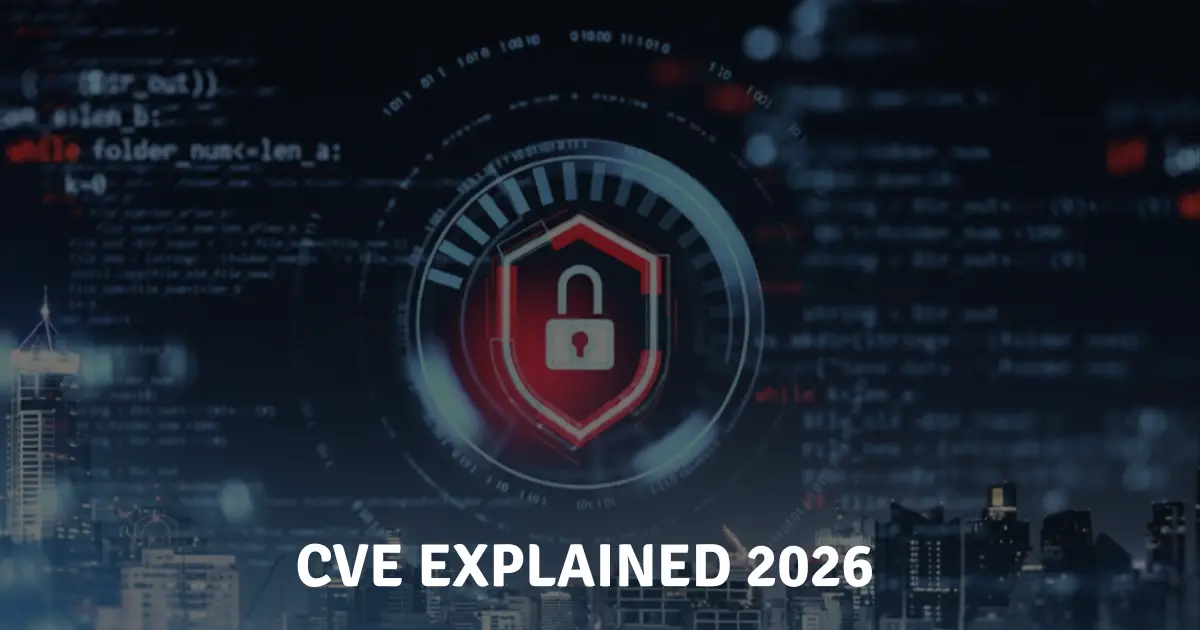
The Complete Guide for 2026 Understand What a CVE Really Is It covers CVE history, how the system works, CVSS scoring real-world examples such as Log4Shell and Heartbleed, detection methods, mitigation strategies and expert tips for effective vulnerability management.
Understanding Common Vulnerabilities and Exposures
Imagine. One normal morning, your systems go silent and sensitive data starts leaking with no obvious warning. One overlooked flaw that has become the nightmare of many organizations. The term CVE is one of the most important building blocks for defence in the world of cybersecurity.
This comprehensive guide to Common Vulnerabilities and Exposures will help you to get the most accurately useful information and knowledge on Common Vulnerabilities and Exposures.I have followed security issues for more than twenty years and I know how proper CVE knowledge separates surviving teams from ones with huge breaches. The guide takes you through real stories technical details and practical steps that actually work in the field.
How CVE System Works and Its History
Common Vulnerabilities and Exposures or CVE refers to a standardized dictionary of publicly known security flaws. MITRE Corporation launched the program back in 1999 to solve a major problem. Security researchers and vendors used different names and tracking methods for the same issues which created confusion and delayed fixes.
Today the system contains well over 340000 CVE records. Each entry receives a unique identifier in the format CVE-YYYY-NNNNN where the year and a sequential number appear. This simple yet powerful system covers both vulnerabilities in code and exposures created by misconfigurations.
CVE Numbering Authorities known as CNAs play the key role in assignment. These include major software vendors security research firms and government bodies. When a researcher discovers a new flaw they report it to the appropriate CNA. The authority validates the issue assigns the CVE ID and coordinates responsible disclosure so patches become available before public exploitation begins.
Real World Impact of Major CVEs
Some CVEs leave permanent marks on the industry. Take Heartbleed for example. Identified as CVE-2014-0160 this OpenSSL bug allowed attackers to steal sensitive memory contents from servers including private keys and user credentials. Hundreds of thousands of websites stood exposed and the incident forced global emergency patching efforts.
Then came Log4Shell in late 2021. CVE-2021-44228 affected the widely used Apache Log4j library. Attackers could achieve remote code execution by simply sending a specially crafted log message. The vulnerability impacted millions of systems across cloud environments enterprise applications and even consumer products. Governments issued emergency directives and security teams worked around the clock to contain the damage.
These high profile cases demonstrate why CVE management matters. Organizations that treat CVEs as routine maintenance avoid costly incidents while those that ignore them pay the price later.
CVSS Scoring Explained for Prioritization
Every CVE entry includes a CVSS score that helps teams understand severity. The Common Vulnerability Scoring System rates issues from 0 to 10 with higher numbers indicating greater danger. Scores above 9.0 classify as Critical and demand immediate attention.
The scoring considers multiple factors including attack vector complexity required privileges and user interaction. Base metrics provide the foundation while temporal and environmental scores adjust the rating for specific situations. The National Vulnerability Database enriches each entry with additional details such as affected products references and available patches.
Experienced professionals never rely on the base score alone. A seemingly medium severity CVE can become critical in certain environments. Always evaluate the context of your own infrastructure before deciding on response priority.
Detection of CVE in Your Systems
Effective detection starts with visibility. Modern vulnerability scanners such as Nessus Qualys and open source tools like OpenVAS regularly check systems against the latest CVE database and highlight exposed assets.
Security teams also rely on Security Information and Event Management platforms to spot unusual behavior that might indicate active exploitation. Maintaining an accurate software inventory remains essential. Once teams know exactly which versions run across their environment they can match them against published CVEs efficiently.
Set up automated alerts for newly published entries that affect your technology stack. Combine active scanning with passive monitoring and consider external bug bounty programs to discover issues that automated tools might miss. In practice the best detection programs blend technology with human expertise.
Effective Mitigation Strategies for CVEs
Successful mitigation goes far beyond simply applying patches. Start by identifying every affected system then deploy vendor updates as quickly as possible. When immediate patching is not feasible implement compensating controls such as temporary configuration changes network restrictions or isolation of vulnerable components.
Enable automatic updates wherever safe and practical. Follow the principle of least privilege so that even successful exploits cause minimal damage. Modern architectures built on network segmentation micro-segmentation and zero trust models provide stronger resilience against CVE exploitation.
Employee training plays a surprisingly large role because many incidents trace back to human error. Regular security awareness sessions help staff recognize phishing attempts and safe software practices. Organizations that combine technical controls with people-focused measures achieve the strongest results.
From my experience leading incident response teams the companies that treat CVE remediation as continuous improvement rather than one-off projects see dramatic reductions in successful attacks over time.
Advanced Insights and Future of CVE Management
The CVE ecosystem continues to evolve. Artificial intelligence now helps predict likely vulnerability patterns and surfaces emerging threats earlier. Related frameworks such as Common Weakness Enumeration provide deeper understanding of root causes behind recurring issues.
Forward-thinking organizations integrate CVE intelligence directly into their broader threat intelligence programs. This approach turns raw vulnerability data into strategic advantage instead of just another compliance checkbox.
Final Thoughts
Mastering CVE processes forms the foundation of strong cybersecurity posture. Knowledge of Common Vulnerabilities and Exposures empowers teams to move from reactive firefighting to proactive defense. New CVEs appear daily but prepared organizations stay ahead of the curve.
Take concrete action today. Audit your current environment establish solid tracking procedures and build response playbooks. The investment in time and resources pays for itself many times over when the next major threat emerges. Stay curious keep learning and treat every CVE as an opportunity to strengthen your defenses. Your systems and your users will thank you for it.