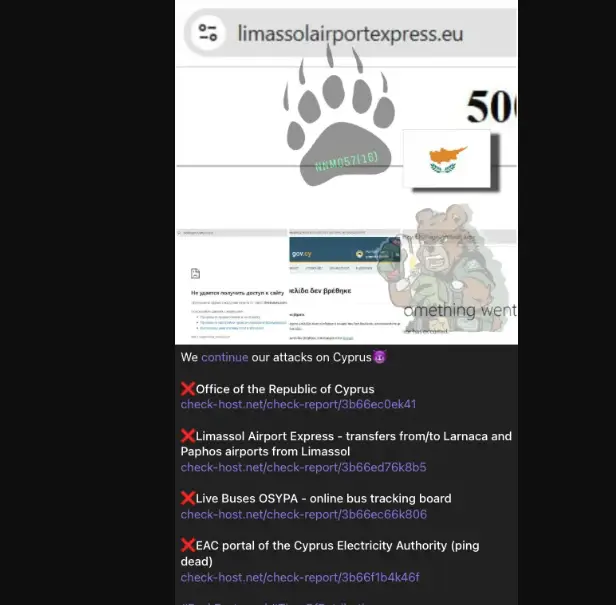
In a significant escalation of regional cyber activity.The pro-Russian hacktivist collective NoName057(16) has reportedly launched a series of Distributed Denial of Service (DDoS) attacks against the Republic of Cyprus. The campaign has targeted the main government infrastructure, including the national electricity provider and themtransportation services associated with Limassol Airport Express and several goverment portals are temporary offline.The incident highlights the growing use of hacktivism and politically motivated cyber operations against the national infrastructure across Europe.
What Happened in the Cyprus DDOS-attack
According to threat-intelligence monitoring and cybercrime tracking channels and telegram channels.The hacker group claimed responsibility for multiple DDoS attacks against Cyprus-based digital services.The hacker groups upload the offline systm pictures and they clamied all the responsibility.
These platforms were reportedly affected:
- Cyprus government web portals.
- The Electricity Authority of Cyprus (EAC) online services.
- Limassol Airport Express transportation website.
- Public transport tracking systems used in the region.
Cyprus just fell under a new wave of attacks and hits home for every nation on the map. It’s a stark reminder that even the smallest countries can feel the ripple of a global conflict.
Hacktivist crews are getting smarter and more collaborative. Because they’re easier to join now.The cost of launching a disruptive strike is dropping faster than ever. Whether it’s a lone coder or a coordinated network the bar to break in has never been this low.
Government agencies and private companies need to ditch a purely reactive mindset and start acting as guardians of their own data.It isn’t enough to wait for the next breach security teams must stay one step ahead of the evolving tricks that the groups like NoName057(16) keep dropping.By turning that anticipation into daily practice they ward off attacks before they even hit the network.