One of the most sophisticated cyberthreats of 2026 is LeakNet ransomware, which differs extremely from normal attacks. This campaign silently compromises systems using hacked websites.ClickFix a social engineering technique and current runtime tools.The most harmful feature is that the malware only operates in memory and leaving no evidence on the disc and making detection very challenging.
How LeakNet Ransomware Attack Works
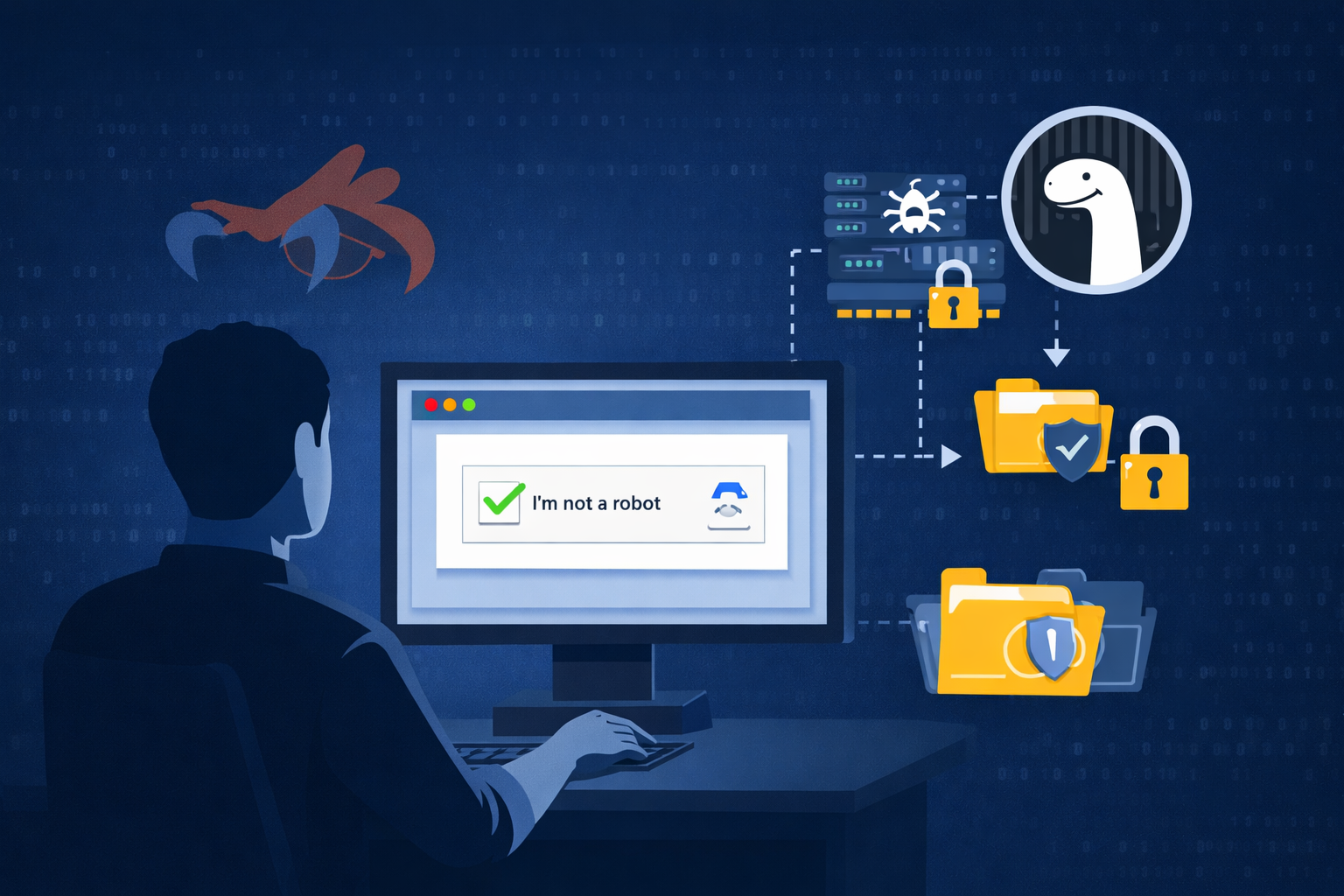
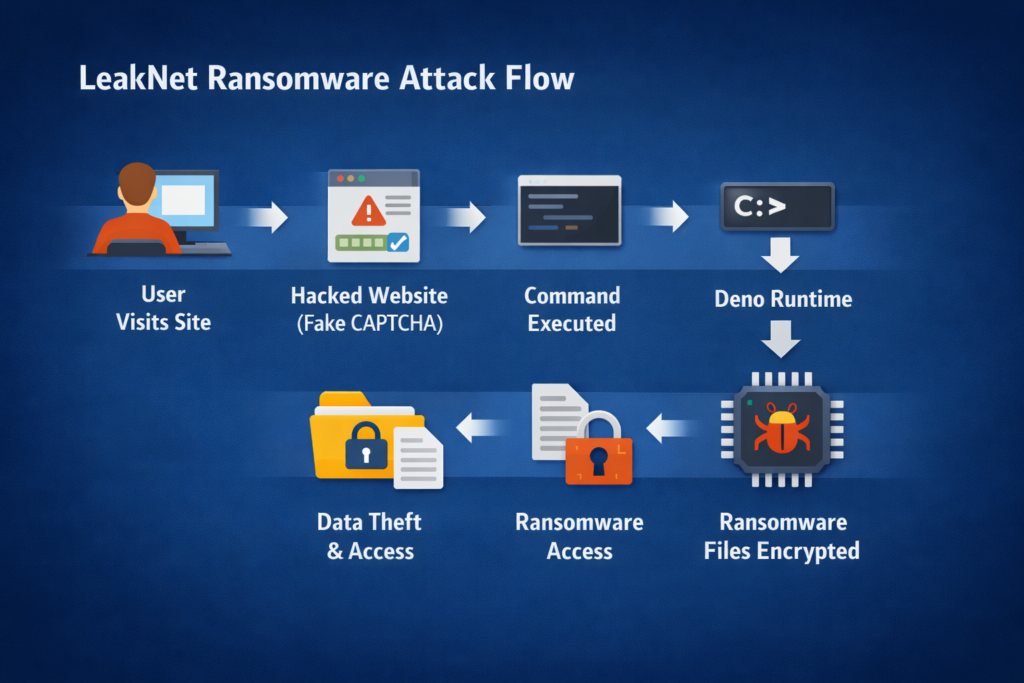
When attacking the victim directly, the LeakNet ransomware manipulates them through a multi-stage process. It all begins with a hacked website showing a fake error message or CAPTCHA. The victim is tricked into believing the interface because it appears genuine.Attackers then use the ClickFix technique which instructs that the users to run a command and typically using PowerShell or the Windows Run dialogue. Once the attack is carried out and the ransomware’s entry point is unintentionally activated.
After that, a background script retrieves a payload from the attacker’s server. It is very difficult for the user to detect any unusual activity because all of this occurs in silence.
Role of Deno in Fileless Malware Execution
The use of the Deno runtime a valid JavaScript runtime utilized by developers is the most unique feature of this attack.This trust is exploited by attackers to run the malicious code.Deno is a fileless attack, which means that no questionable files are kept on the hard drive because the malware loads straight into memory. Such attacks are frequently missed by conventional antivirus programs.
Additionally this technique improves stealth and persistence by enabling attackers to dynamically update the malware without leaving visible traces.
Why LeakNet Attack is Extremely Dangerous
Because LeakNet carefully takes advantage of user interaction to make the victim accidentally carry out the malicious command themselves, it is regarded as more dangerous than conventional ransomware. The attack uses social engineering or misleading prompts to convince the user to execute a command that seems harmless rather than forcing entry through obvious exploits.Many security systems are consider that the action is legitimate since it is technically carried out by the user which enables the attack to avoid conventional detection methods.
LeakNet’s use of advanced evasion techniques is another element that contributes to its exceptional stealth. In order to avoid leaving obvious traces on the disc and the malware frequently operates directly in memory rather than installing sizable files on the system Additionally, it blends the malicious activity with regular system operations by utilising trusted system tools and authorised administrative utilities that are already installed on the system.
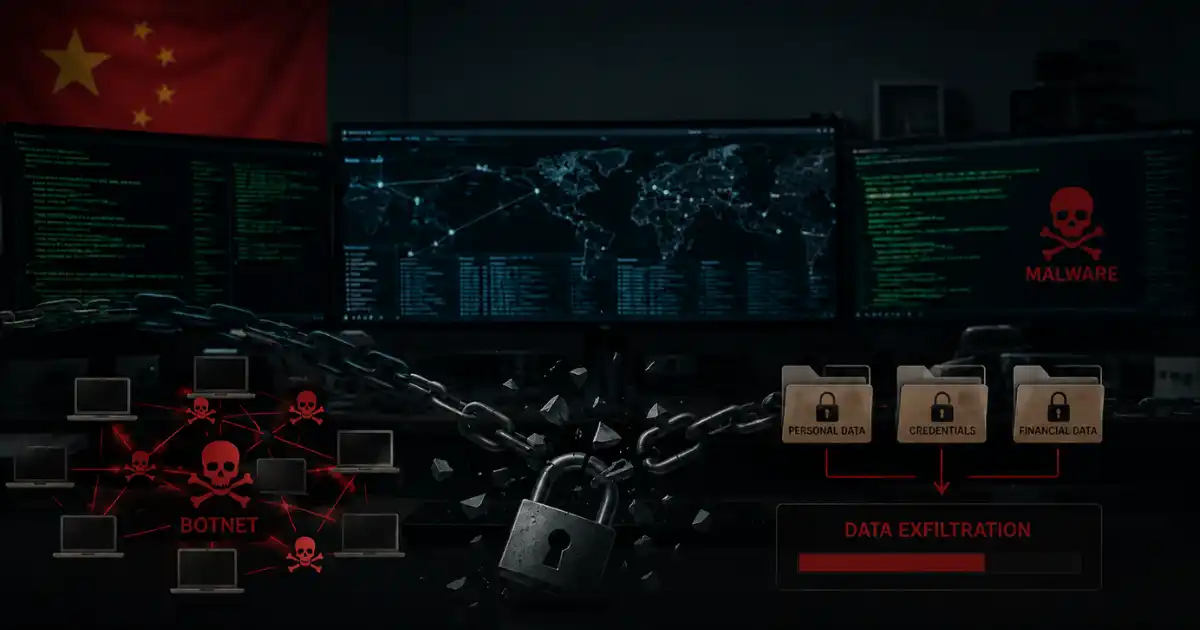
In addition to encrypting files LeakNet attackers often carry out data exfiltration before encryption, transferring private company information, credentials, or sensitive files to their own servers. This makes it possible to use a double extortion tactic in which victims are coerced by the threat of public data exposure in addition to losing access their systems..The attackers still release the stolen data online even if company declines to pay the ransom which could result in monetary loss and harm to the companys reputation and even legal penalties. LeakNet is a very dangerous and dynamic ransomware threat because of its combination of stealth, user-triggered execution, and dataleak threats.
How to Protect Against LeakNet Ransomware
Instead of depending solely on conventional security tools, organizations and individual are users must be embrace active cybersecurity practices to protect against sophisticated threats like LeakNet.Avoiding following instructions from new or sites that are not trustworthy is one of the most crucial safety measures especially when those websites ask users to run commands on their systems. Although these instructions might seem harmless they have the potential to cause harmful activities that compromise the device. Before completing any unusual task that is suggested online, caution and verification are crucial because these attacks frequently rely on deceiving users.
Instead of depending only known malware signatures and organizations should also use behavior-based security technologies, such as advanced monitoring systems and Endpoint Detection and Response (EDR) solutions.Another important step is regularly update operating systems, apps and security patches because out-of-date software may have vulnerabilities that hackers can take benefit.In the event that a system is compromised and strong access controls such as multi-factor authentication and limited privileges, can further reduce the harm.