GhostLock CVE 2026 43499 a 15 year old use after free flaw in the Linux kernel futex subsystem lets any local unprivileged user gain full root access in about five seconds and escape containers with 97 percent exploit reliability.
Imagine sitting at any shared Linux server as a regular low privilege user and within five seconds watching a root shell open right in front of you. No exploit kit needed. No special configuration required. No network connection involved.
Just ordinary threading calls that every program uses turning a quiet kernel mistake into full system control. That exact moment arrived on July 8 2026 when Nebula Security published GhostLock alongside working exploit code that anyone can now download and run.
GhostLock Kernel Exploit Explained
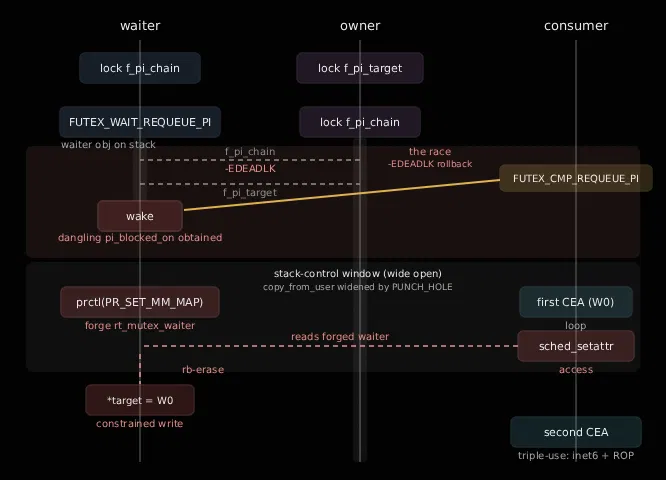
The flaw carries the identifier CVE 2026 43499 and lives inside the Linux kernel futex subsystem which handles thread synchronization across essentially every Linux process. Futex code carries a priority inheritance mechanism designed to prevent a high priority task from getting stuck waiting behind a low priority one. The cleanup routine inside that mechanism runs correctly in almost every case but collapses in one specific scenario where a lock operation hits a dead end and needs to back out of its attempt.
In that rare backing out moment the cleanup routine fires at exactly the wrong time and wipes out the record belonging to the wrong task entirely. The kernel then holds a stale pointer targeting memory it already released and reallocated somewhere else.
(source: Nebula Security)
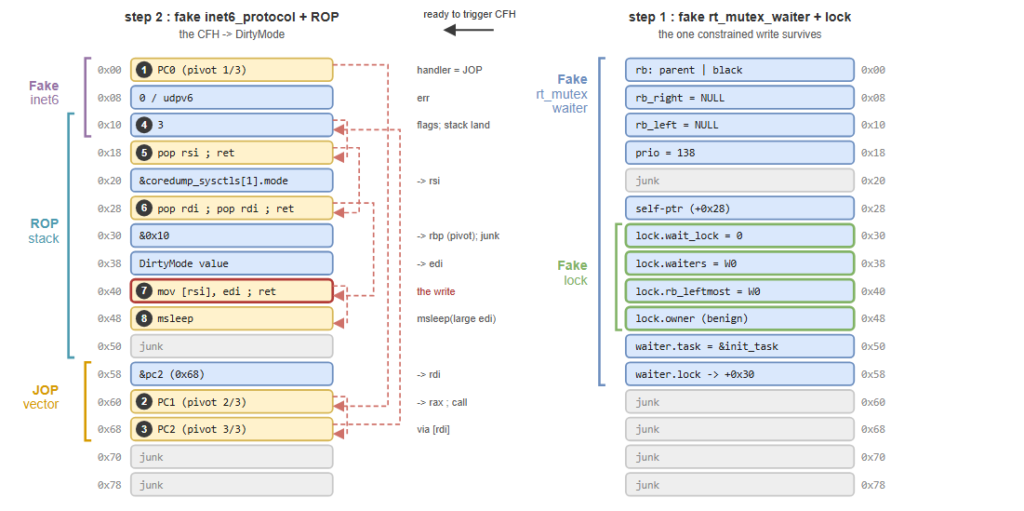
Trusting that stale pointer to be valid produces the classic use after free condition and Nebula chained several clever steps together to turn that small mistake into full kernel control ending with the kernel running attacker supplied code at the all powerful root privilege level.
(source: Nebula Security)
Nebula found GhostLock using an internal AI powered bug hunting tool called VEGA rather than manual code review which explains why this particular mistake sat undiscovered for fifteen years despite living in one of the most widely used sections of kernel code.
The flaw scored 7.8 out of 10 on the CVSS scale which reads as high severity rather than critical because an attacker needs existing local access to the machine before triggiting it. That qualification sounds limiting until the full attack picture gets considered.
GhostLock does not stand alone. Nebula built this flaw into a two part chain they call IonStack. The first half tracked as CVE 2026 10702 sits inside Firefox as a browser sandbox escape flaw. The second half is GhostLock carrying code execution from inside the compromised browser process all the way to full root on the underlying operating system.
Nebula demonstrated the complete chain running against Firefox on Android converting a single tap on a malicious link into full device root control. On their test hardware the kernel privilege escalation portion completed in roughly five seconds with 97 percent reliability across repeated tests.
The flaw shipped by default in essentially every mainstream Linux distribution since 2011 and the fixed kernel commit only landed in April 2026. Google rewarded Nebula through the kernelCTF bug bounty program with a payment of 92337 dollars reflecting the genuine severity of a reliable cross container kernel exploit. The presence of published working exploit code on GitHub since disclosure means every unpatched machine now faces active exploitation risk regardless of whether any threat group previously knew about this bug.
GhostLock Container Escape Distro Coverage And Mitigation Guide
One of the most significant elements of this disclosure involves what happens inside containerized environments. GhostLock breaks container isolation entirely meaning an attacker who gains any foothold inside a container on a shared Kubernetes node cloud instance or CI and CD runner can use this flaw to break out of the container boundary and reach the underlying host with full root access. This dramatically expands the practical risk surface far beyond single machine scenarios since shared infrastructure commonly runs many tenant workloads in containers on the same kernel.
Distribution coverage for both the vulnerability and the available patches tells an uneven story. The original kernel fix landed in April and patching began rolling through distribution channels over the following weeks.
However the original fix introduced a separate crash bug tracked as CVE 2026 53166 and the cleanup for that secondary crash was still settling in upstream repositories during early July which means the earliest patched distribution builds may themselves carry a stability issue. Security teams should verify the specific fixed package version against their distribution advisory rather than assuming the first available patch resolves everything cleanly.
Ubuntu had patched its newest release and certain cloud specific kernel builds but as of early July still listed 24.04 LTS and 22.04 LTS and 20.04 LTS as vulnerable or in progress. The uneven availability across long term support releases particularly affects enterprise environments running stable distributions where kernel updates carry change control overhead and may face delays.
Two kernel build options offer meaningful mitigation without fully eliminating the vulnerability. RANDOMIZE KSTACK OFFSET and STATIC USERMODE HELPER both make reliable exploitation harder by introducing uncertainty into memory layout predictions the exploit depends on but neither option qualifies as a complete fix on its own. Patching remains the only real resolution.
Security teams should prioritize patching shared and multi tenant machines first specifically cloud servers Kubernetes worker nodes container runtimes and CI and CD build runners since these environments combine the local access prerequisite with the maximum potential blast radius from a container escape. Single user workstations carry lower urgency since an attacker needs that local foothold first but any machine accessible by multiple users or running automated workloads should get treated as high priority.
Organizations running unpatched systems that genuinely cannot patch immediately should evaluate whether the RANDOMIZE KSTACK OFFSET build option can get enabled and should review any monitoring tooling for unusual privilege escalation patterns specifically any unprivileged process spawning a root shell through threading operations.
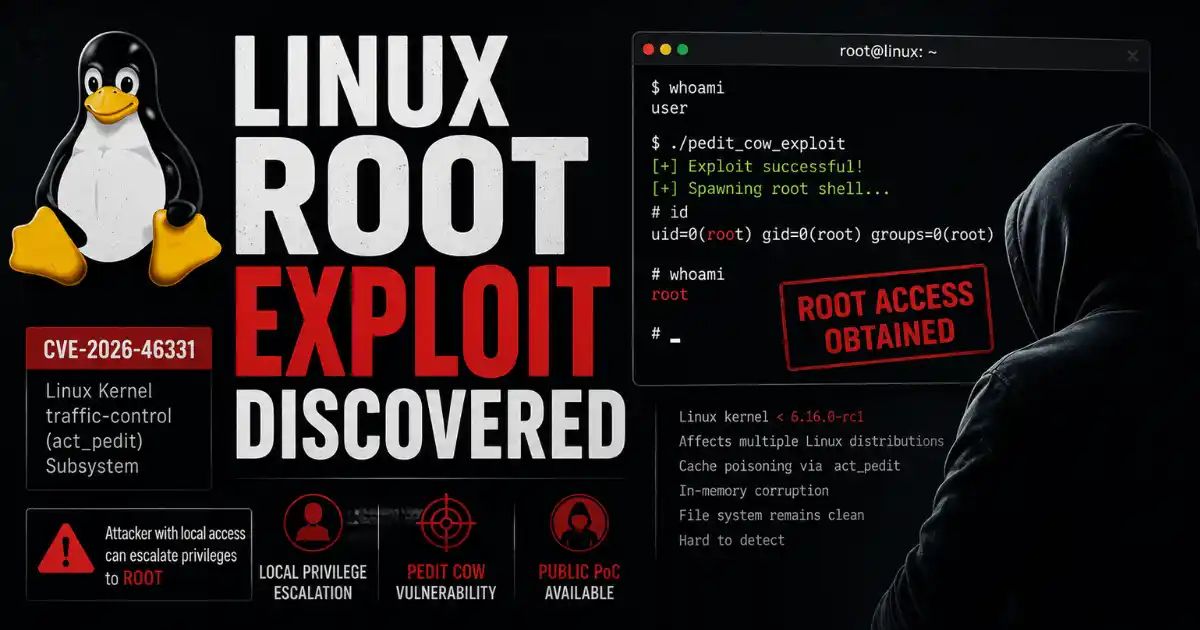
GhostLock joins a notable series of 2026 Linux privilege escalation bugs including Bad Epoll and Copy Fail and pedit COW all of which share the detail that automated tools either discovered them or proved their exploitability faster than traditional research timelines previously allowed.