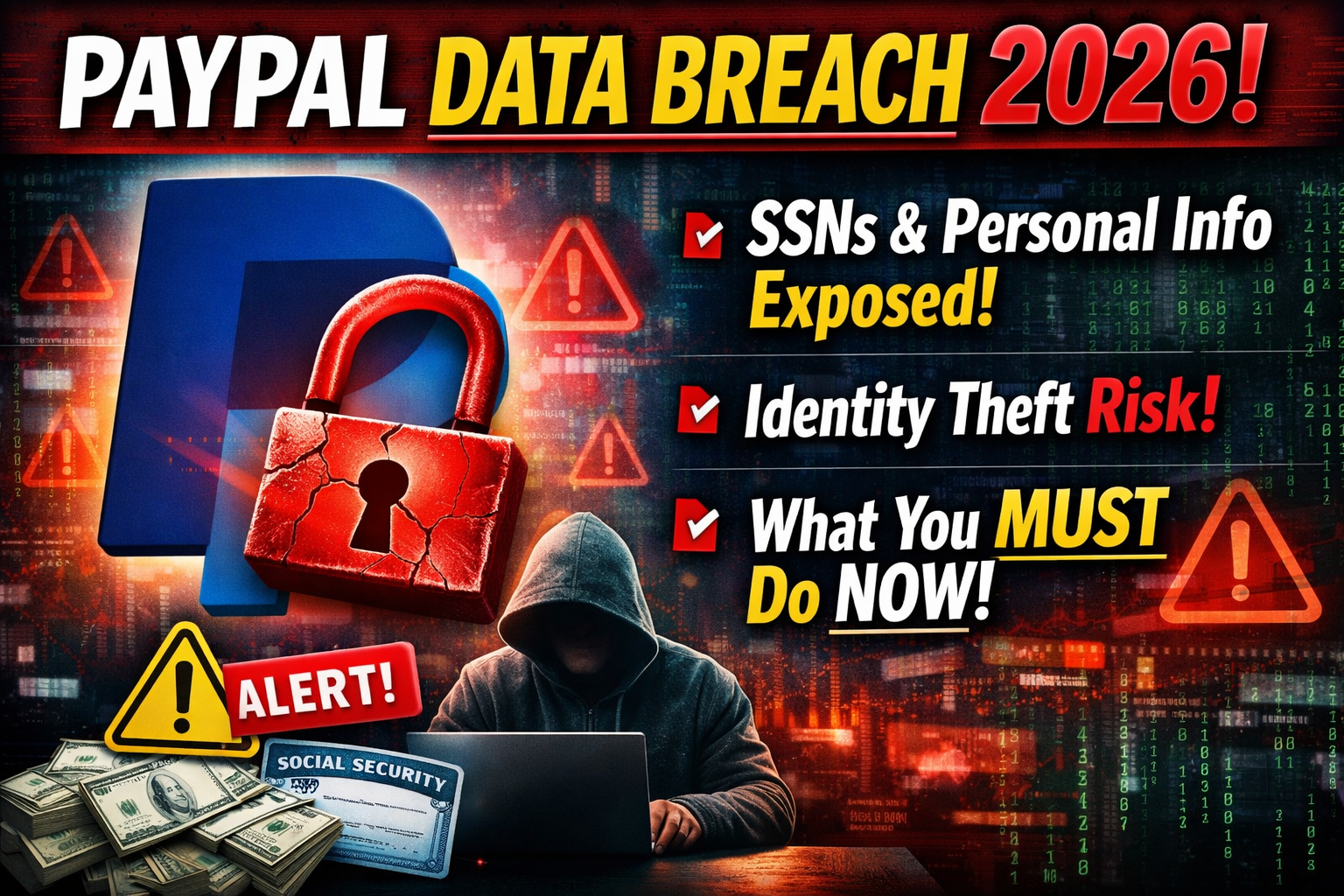
In 2026, PayPal suffered a fresh data breach that let users’ sensitive information slip out.The incident has stirred a wave of worry. People now fear identity theft, financial fraud, and a surge of phishing scams. With PayPal anchoring billions of online transactions, the breach feels especially unsettling.Cybersecurity experts say the breach hit customers of certain financial services. The unauthorized access could have exposed their personal data for months before anyone even noticed.
What Was Exposed in the PayPal Security Breach?
According to early disclosures, the compromised data may include:
- Full Names
- Email Addresses
- Phone Numbers
- Dates of Birth
- Social Security Numbers (SSNs)
When your Social Security number lands in the wrong hands, the danger of everything from credit‑card fraud to tax scams and identity theft shoots straight up. Menace hunters on the cyber‑crime frontier point out that hackers are quick to turn those leaked details into dark‑web listings, hijack accounts, or spin laser‑focused phishing attacks.
PayPal has said only a handful of users were affected. Still, the fact that the breach went undetected for so long is raising eyebrows. It’s sparking a fresh debate about how data‑protection rules are set up, how firms keep an eye on compliance, and the robustness of today’s financial cyber‑security landscape.
What Should PayPal Users Do Now?
f you have a PayPal account, especially business or working capital services, take these immediate steps:
- Change your password immediately
- Enable Two-Factor Authentication (2FA)
- Monitor bank & credit card statements
- Set up fraud alerts with credit bureaus
- Beware of phishing emails pretending to be PayPal
Financial cybersecurity experts recommend proactive monitoring because stolen identity data can be misused months or even years later.