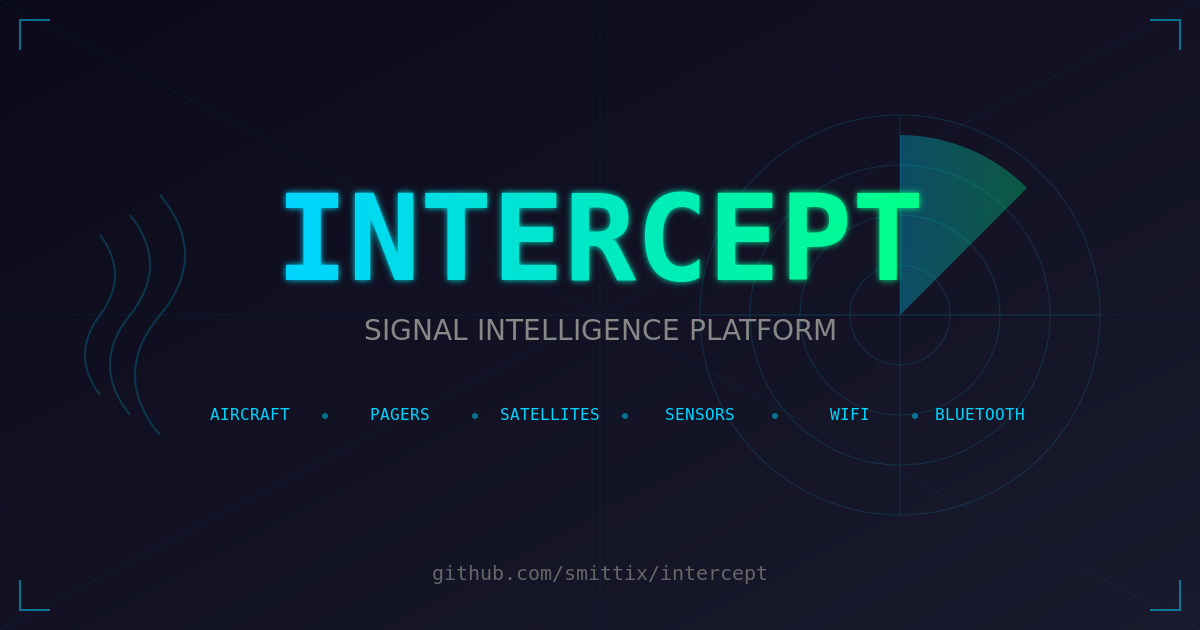
In the world of Open Source Intelligence (OSINT) digital data is only half the story. The other half exists in the airwaves. Intercept an open-source project by Smittix is a powerful tool designed to capture and analyize the radio frequency (RF) signals.
Whether you are a cybersecurity professional a hobby or an intelligence researcher, Intercept provides a centralized web-based interface for complex Signal Intelligence (SIGINT) tasks that usually require a multiple disparate tools.
Core Functions of Intercept
Intercept acts as a manager of managers like wrapping several high-end SDR (Software Defined Radio) utilities into one sleek dashboard. Its primary functions include:
- Real-Time Signal Visualization: Transforms a raw radio data into actionable visual maps and charts.
- Automated Monitoring: Sets up persistent listeners that log data to a database (PostgreSQL) even when you aren’t looking at the screen.
- Geospatial Tracking: Plots the physical location of transmitters such as aircraft, ships, or WiFi access points directly onto interactive maps.
- Remote Sensor Management: Allows users to deploy Agents on remote hardware (like a Raspberry Pi) and view the data from a central command server.
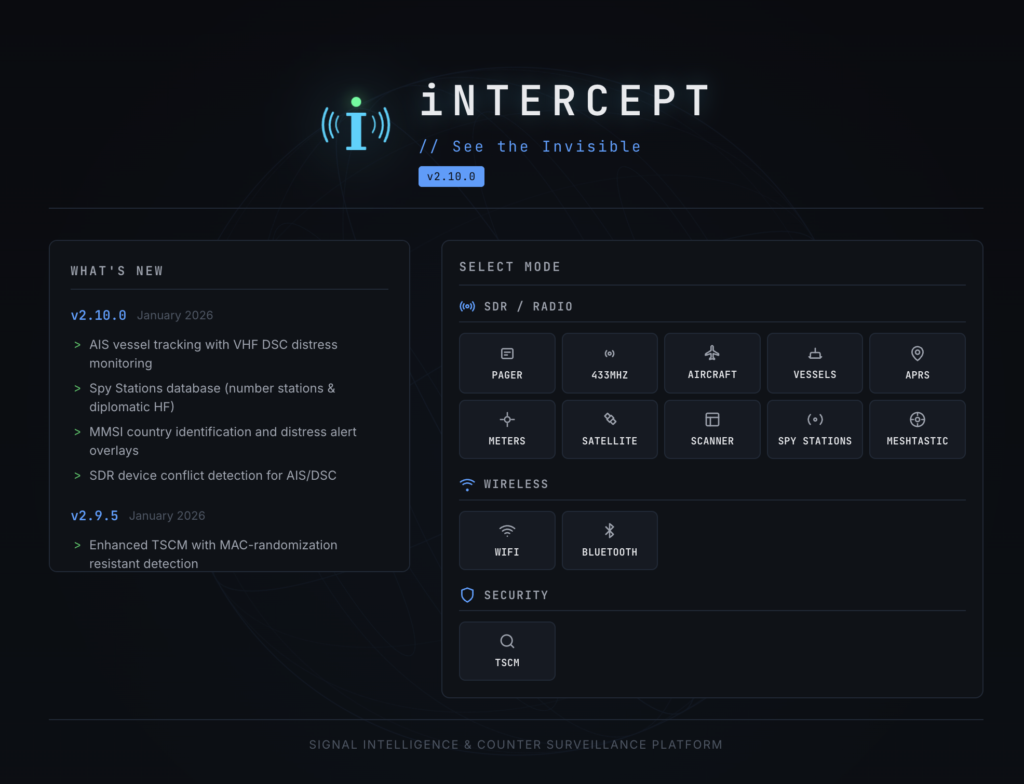
Capabilities
The true power of Intercept lies in its modular capabilities. By connecting an RTL-SDR or similar hardware, you unlock the following features:
1. Aviation & Maritime Intelligence
Intercept tracks ADS-B (Automatic Dependent Surveillance-Broadcast) signals. It provides a “WarGames” style flight radar, showing aircraft altitudes, speeds, and identifying information in real-time.
2. Network Reconnaissance
Using aircrack-ng and Ubertooth integrations the platform identifies:
- WiFi Networks: Maps SSIDs, MAC addresses, and signal strengths.
- Bluetooth Devices: Discovers discoverable and non-discoverable Bluetooth devices nearby.
- Tracker Detection: Specifically looks for mobile tracking tags (like AirTags) to ensure privacy.
3. Satellite & Space Weather
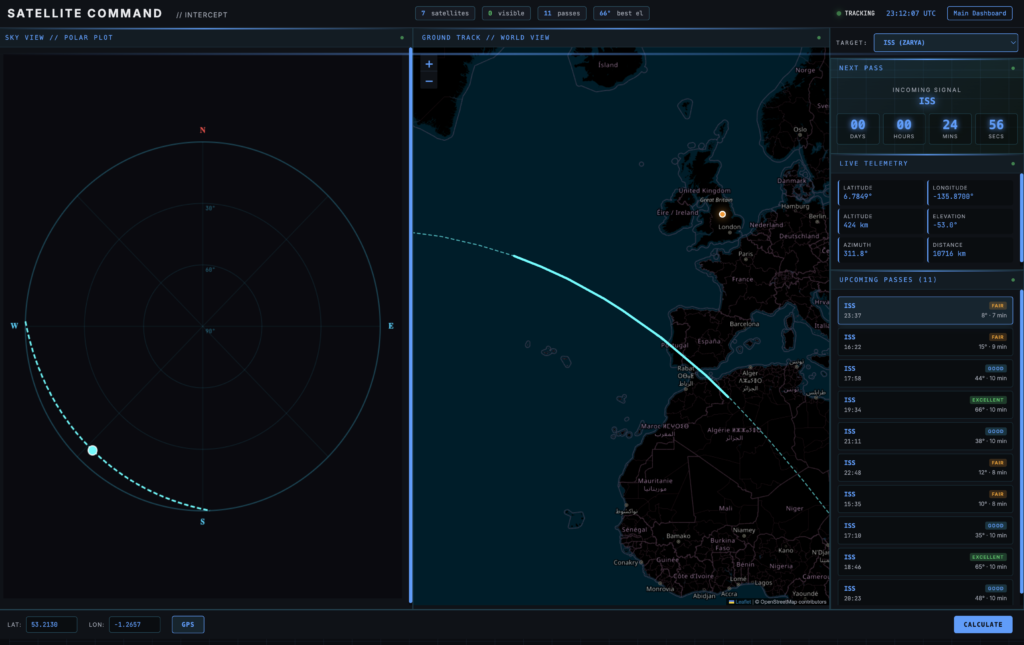
The platform includes a built-in Satellite Tracker that predicts when satellites will pass over a your specific coordinates. It also pulls up the live data from NOAA and NASA to monitor solar flares and geo-magnetic storms that can affect a radio propagations.
4. Utility & Infrastructure Monitoring
Using the rtlamr module, Intercept can intercept unencrypted radio packets from Smart utility meters. This can reveal patterns in electricity, gas, and water usage for a specific area a high-level OSINT technique for determining building occupancy.
How to Download and Install Intercept
Intercept is hosted on GitHub and is designed to run on Linux (Debian/Ubuntu) or macOS. To get started, follow these standard deployment steps:
Prerequisites:
- Hardware: An RTL-SDR dongle (V3 or V4).
- Dependencies: Python 3.x and PostgreSQL.
Installation Steps:
Clone the Repository https://github.com/smittix/intercept.git cd intercept
Run the Setup Script dependencies.Bash./setup.sh
Launch the Dashboard: Bashsudo -E venv/bin/python intercept.py
Open your browser and go to http://localhost:8080 Use the default login:
Username: admin
Password: admin
Conclusion
Intercept by Smittix is a game changer for anyone looking to bridge the gap between physical radio signals and digital intelligence. By consolidating aviation, maritime, network, and satellite data into a single pane of glass, it simplifies the complex world of SIGINT for the modern OSINT investigator.