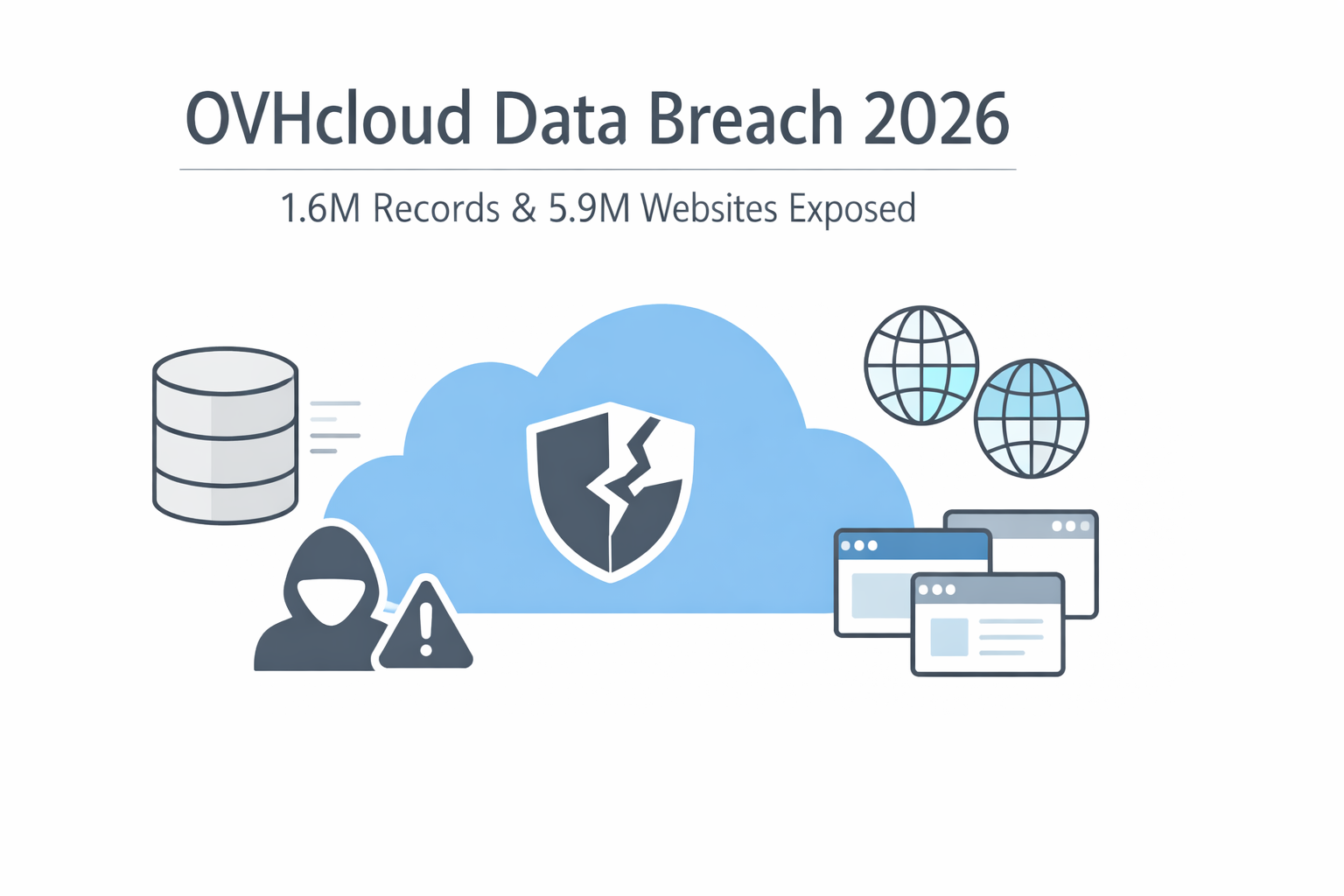
The 2026 data breach involving OVHcloud has emerged as one of the most significant cybersecurity incidents of this year and exposing the approximately 1.6 million customer records and affecting nearly 5.9 million hosted websites. As a major European cloud provider OVHcloud hosts infrastructure for startups, enterprises and government related services which makes any security breach extremely impactful. This breach highlights the growing risks associated with controlled cloud environments where a single vulnerability can have massive downstream consequences across millions of users and systems.
Inside the OVHcloud Hack: How the 2026 Data Breach Occurred
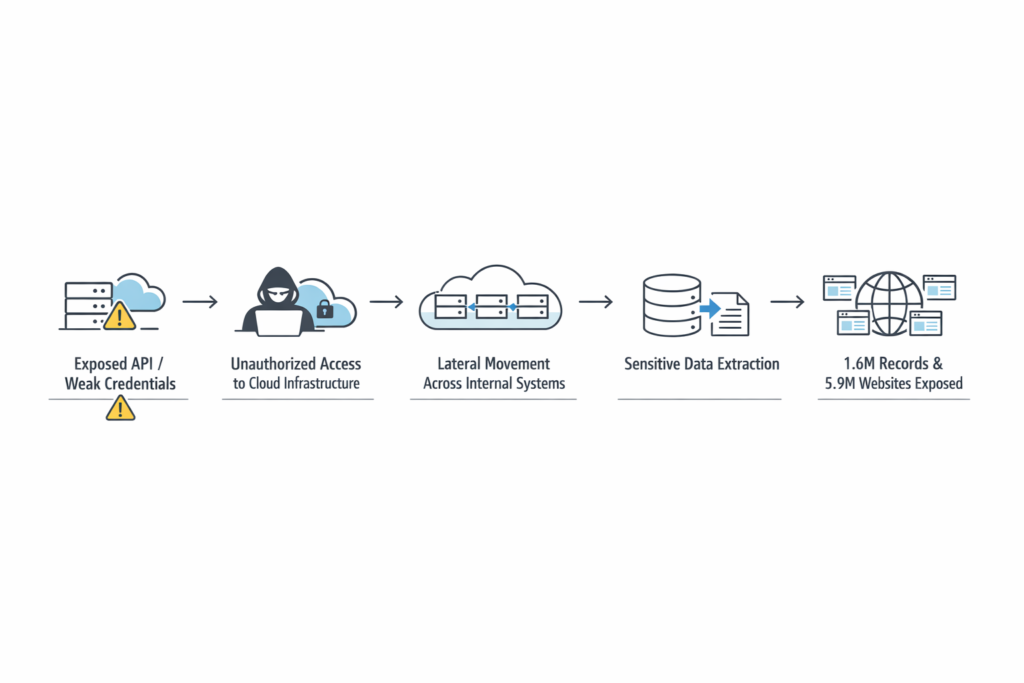
People think the breach happened because there was weak entry point in the cloud infrastructure like a misconfigured API, a weak authentication system, or a system component that wasnt patched.Attackers usually look for these kinds of weaknesses and use them to get in. Once they get in, they can get more power and move around inside systems. In case of OVHcloud it looks like the attackers were able to get around the companys internal systems and access sensitive databases.Hackers often go after parts that are not well protected or that people don’t pay attention to, instead of core systems that are well protected.
The attackers probably concentrated on remaining persistent while avoiding detection after obtaining deeper access.This typically involves setting up covert backdoors, stealing login credentials, or taking advantage of system-to-system trust. By doing this, they can gradually and covertly gather important data without setting off any alarms. In many breaches, the actual harm occurs during this silent phase where data is extracted and security teams are unaware, rather than at the point of entry. This highlights how essential it is to have strict access controls, ongoing monitoring, and quick threat detection in order to minimise the effects of such incidents.
What Data Was Exposed in the OVHcloud Data Breach 2026? Full Leak Details
Major concerns about cloud infrastructure security and data protection processes are raised by the breach and leading to a massive cybersecurity incident that exposed significant quantities of sensitive user data. Customer identities, email addresses, and important service related information like server configurations and hosting environment data were allegedly compromised.Cybersecurity analysts warn that exposed technical and personal data can be used as a weapon for highly targeted attacks even in the absence of verified financial data theft.Threat actors may now have access to backend systems, domain configurations and internal architecture that can be further exploited, potentially affecting millions of websites.
The chance of phishing campaigns, social engineering attacks, credential harvesting, and account takeover incidents is significantly increased by this type of extensive data exposure. Additionally, attackers can use this information to identify infrastructure vulnerabilities and initiate secondary exploitation attempts, such as the deployment of malware or unapproved access to linked services. Incidents like this demonstrate the critical need for advanced threat detection, zero-trust security models, endpoint protection, and ongoing monitoring to protect contemporary cloud environments from future breaches as cyber threats continue to change.
How the OVHcloud Data Breach 2026 Affects Businesses and Website Owners
For companies and website owners who rely on cloud infrastructure for everyday operations, the 2026 OVHcloud data breach has significant effects. Any security breach can result in major disruptions, such as outages of services, data leaks, and a decline in customer trust, since cloud platforms are the basis of modern digital services. Operational downtime could have a direct impact on revenue, productivity and user experience for organisations impacted by the breach. Additionally, businesses may suffer reputational harm as consumers start to worry about the security and storage of their data, which could result in a decline in business and long-term effects on their brand. Legally speaking, companies may also face regulatory fines, compliance problems, and data protection tasks, particularly if sensitive client data was not sufficiently protected.
The risks are equally important for website owners. Email addresses, hosting settings, and backend information are examples of exposed data that can give attackers useful information to launch focused cyberattacks. This raises the risk of malware injections, phishing campaigns, brute-force attacks and website takeovers.Hackers can use vulnerabilities that have been found to obtain unauthorised access, deface websites, or even use compromised websites to spread malicious content. Additionally, owners of small and medium-sized websites are especially susceptible to secondary attacks after such breaches because they might not have sophisticated security measures. In order to reduce risks and safeguard data in an increasingly threat-driven online environment this incident emphasises the critical need for stronger cybersecurity practices, such as frequent security audits, robust authentication procedures, prompt patching and ongoing surveillance.
Cloud Security Risks Exposed by the OVHcloud Data Breach 2026
This incident brings to light a number of serious cloud security flaws that still pose a threat to contemporary digital infrastructures, such as improperly configured cloud services, lax identity and access management (IAM) controls, and a deficiency in real-time threat detection and monitoring. Cybercriminals are increasingly focusing on cloud-specific attack surfaces as more businesses move to cloud-based environments, taking advantage of weaknesses that frequently go undetected in complex infrastructures. The OVHcloud hack is an ideal example of how even a small configuration or access permission error can turn into a massive cybersecurity breach that affects millions of users and systems.
This case also highlights the increasing significance of putting in place advanced security frameworks like the zero-trust security model, which requires ongoing verification of each user, device, and system before granting access.In the current threat scenario, traditional border security is no longer sufficient. Strong authentication procedures, least-privilege access guidelines, ongoing monitoring and automated threat response systems are just a few of the multi-layered security measures that organisations must implement.Early cloud security is a top priority in the rapidly changing field of cybersecurity because without these safeguards, companies are still extremely vulnerable to data breaches, unauthorised access and persistent cyber threats.
OVHcloud Data Breach 2026 Response: Mitigation Steps and Security Measures Explained
OVHcloud initiated a thorough incident response and security investigation after the incident was discovered, attempting to determine the underlying cause and evaluate the complete scope of the breach. The business started alerting impacted clients while also carrying out crucial corrective actions, like patching vulnerabilities found, building access control systems, and improving real-time monitoring and threat detection systems. In order to limit future exposure and stop similar attacks, these steps are crucial. However, cybersecurity experts point out that breaches of this magnitude frequently have lasting effects, such as diminished consumer confidence, harm to a brand’s reputation, and heightened regulatory scrutiny, especially in light of stringent data protection and privacy laws.
In order to reduce potential risks, customers and businesses that depend on OVHcloud services must act quickly. Resetting account passwords, turning on multi-factor authentication (MFA) for an extra degree of protection, and keeping a close eye out for any strange or unauthorised activity are all highly recommended. To avoid unwanted access, companies should also perform their own security audits, examine system logs, and update cloud service login credentials. This incident is a potent reminder that, in a time when cloud-based threats are growing more complex and universal, both service providers and users bear responsibility for applying effective cybersecurity practices.