A Complete Breakdown of CVE-2026-33825 and BlueHammer An angry researcher challenged Microsoft by releasing a system-wide exploit on GitHub that weaponized Windows Defenders own update mechanism. The context of Patch Tuesday April 2026 the exploits technical intricacies, Volume Shadow Copy abuse and what this whole incident means for the cybersecurity community all in one place.
CVE-2026-33825 a vulnerability that could give any Windows user complete system access is directly linked to the anger one researcher felt after months of silence from the MSRC. This isn’t just a bug, its the story of a confused relationship.
Microsoft Defender Zero-Day Leak Explained
On the night of April 3, 2026, a small blow struck the cybersecurity community. Someone who went by the names Chaotic Eclipse and Nightmare Eclipse uploaded some code to GitHub. No press release, no CVE numberand no declaration of responsible disclosure. Just one simple line I was not bluffing Microsoft and I’m doing it again.
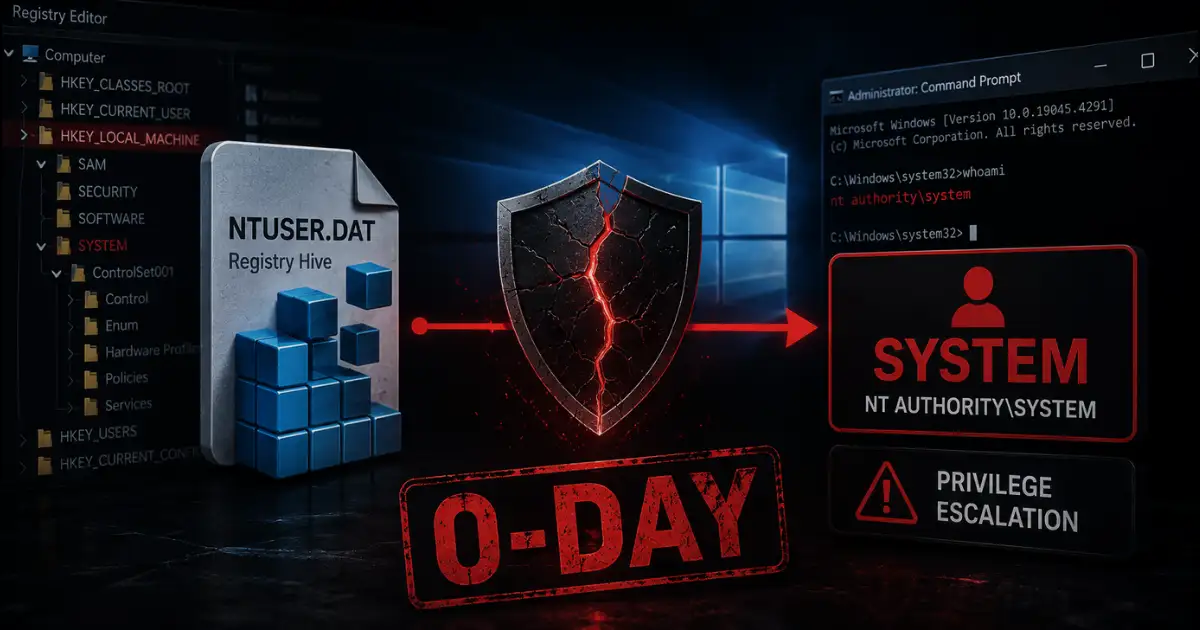
This code was BlueHammer an exploit that directly uses Windows own security layer and Microsoft Defender against itself and turns a perfectly normal and restricted user account into a system master in seconds.
This news isn’t just important because a dangerous vulnerability was publicly leaked. Its important because the entire story behind it exposes a fundamental tension in cybersecurity that has long existed between researchers and large technology companies how long should a researcher wait how long should they apologize and when should they decide whether the world should know the depths of the system they blindly trust.
BlueHammer Exploit Explained
BlueHammer is a Local Privilege Escalation (LPE) exploit. This means it doesn’t give anyone the power to attack directly from the internet; the attacker first needs some kind of normal user access to the machine. But this is precisely what hides the true depth of this vulnerability.
There are thousands of ways to gain local access to our digital world a phishing email a compromised third-party app a stolen credential or a minute of carelessness in an office.Once an attacker gains low-privilege access and BlueHammer converts that access to NT AUTHORITY\SYSTEM the highest privilege level in Windows, in literally seconds.
At this level, they can do anything disable security software, install backdoors steal data create a new admin account or delete everything.What makes BlueHammer different is that its not a traditional exploit. Most exploits target a specific bug in a single component a buffer overflow here a permission error there. Technically no single component was broken in BlueHammer.
Cyderes research group Howler Cell did a deeper investigation into this and the picture that emerged was quite disturbing. This exploit chains five perfectly legal, documented and intentionally designed Windows features in a specific sequence and their combination creates a situation that no individual designer had ever thought of.
This is a design flaw in how Microsoft Defender, Volume Shadow Copy, the Cloud Files API, and opportunistic locks interact at specific times. No single component is flawed.
Technical Deep Dive Five Features One Chain & One Control
This one requires a bit of a technical journey to understand, but lets try to keep it simple. When Microsoft Defender updates its virus definitions or fixes a suspicious file, it does something that many people don’t know: it creates a temporary Volume Shadow Copy snapshot.
Volume Shadow Copy is a Windows feature that creates a frozen version of files at the time of backup, regardless of the file type in use. This snapshot contains some files that are normally locked at runtime, specifically the SAM database, SYSTEM and SECURITY registry hives. These are the files that store NTLM hashes of Windows users’ passwords.
BlueHammer exploits this window. The exploit first checks if there are any pending Defender updates. Then it drops an EICAR test file which is a standard, harmless antivirus test file to initiate the Defender scan and remediation workflow. When Defender begins its work BlueHammer uses batch opalocks a Windows mechanism that can temporarily block file access as a tripwire. Additionally it registers a Cloud Files sync root and places a trap file.
When Defenders WinDefend service tries to access that file, a callback is fired that doesn’t return, meaning Defender hangs in place frozen. And in this frozen state the Volume Shadow Copy snapshot is still mounted accessible and the password hashes of the SAM database can be extracted from that snapshot.
Now the attacker has the local administrators NTLM hash. Using that hash, they change the local administrator account’s password, log in, duplicate the security token to SYSTEM integrity, and spawn a shell via the CreateService function that runs on behalf of NT AUTHORITY\SYSTEM. And the most mind blowing part after all this is done the exploit restores the original password hash so that theres no forensic evidence left and nothing unusual is observed on the system.
Why Signature Detection Is No Longer Sufficient
Microsoft pushed a signature update to Defender after the exploit was released that detects the original PoC binary called Exploit Win32/DfndrPEBluHmr.BB. But Cyderes and other researchers warned that this is insufficient. Because the vulnerability is not in a single file but in the interconnected interactions of Windows components an attacker can simply modify or recompile the source code and bypass the signature. The actual underlying technique remains completely undetected.
Microsoft and Security Researchers: A Fractured Trust
This story isn’t just technical its also human.Chaotic Eclipse broke the rules of responsible disclosure by exploiting it. They first reported it to Microsoft. But the response they received, or rather the lack of response, frustrated them so much that they took this unusual step.
BleepingComputer investigated this and Will Dormann and senior principal vulnerability analyst at Tharos, confirmed that the exploit works and also said that Microsofts Security Response Center (MSRC) has a requirement that researchers submit a video demonstration of their vulnerability.
This requirement to create and submit videos is controversial in the research community. Some researchers say it’s a friction point that’s an unbearable burden for smaller or independent researchers, and often serves as an excuse to stall or close cases.
Chaotic Eclipse openly wrote that the MSRC has lowered its quality standards after laying off experienced security personnel and replacing them with people who follow rigid checklists and don’t think. This was an expression of personal frustration and Dark Reading reported that the researcher also wrote on X that Microsoft later made an update to the code that wasn’t actually a bug fix but an attempt to make exploitation a little harder.
Delayed Response Patch Issued After 11 Days
On April 14, 2026, Microsoft released its monthly Patch Tuesday, and it wasn’t a regular update. Satnam Narang of Tenable called it the second-biggest Patch Tuesday in the companys history. 163 vulnerabilities were patched in a single day, and Adam Barnett of Rapid7 said the count of browser vulnerabilities was approximately 60 a new record in that specific category.
Amidst all this CVE-2026-33825 was officially assigned to the Microsoft Defender Elevation of Privilege Vulnerability, and the fix shipped in Antimalware Platform version 4.18.26030.3011.But here an important point: there were 11 full days between April 3 and April 14 when the exploit was publicly available and working, and there was no official patch.
After the patch on April 14 Will Dormann said that the BlueHammer exploit code no longer worked..But these 11 days when any motivated attacker could download and use this code from GitHub were the window in which real damage could be caused. Bleeping Computer, Help Net Security and other security news outlets warned during that period that ransomware operators and APT groups routinely incorporate publicly released LPE code into their arsenals within days.
What Was Fixed in This Patch Tuesday Update?
In addition to BlueHammer this release included CVE-2026-32201 a spoofing vulnerability in SharePoint Server that had already been exploited in the wild. CVE-2026-33827 was a Windows TCP/IP bug that was wormable on IPv6 and IPSec enabled systems according to Zero Day Initiative and meaning it could spread across an entire network without user interaction. CVE-2026-33826 was an RCE vulnerability in Active Directory and CVE-2026-27913 was a bypass in BitLocker. Overall Microsoft reiterated in this release how large and active the Windows attack surface is.
Measuring the Real-World Effects
An important question is whether anyone has actually used BlueHammer in real attacks. There have been no confirmed public cases yet. Microsoft officially stated as of April 14 that it has not yet been exploited in the wild, but this should be taken with a grain of salt.
Defenders often take weeks or months to publicly confirm zero-day attacks, as investigation, forensics and disclosure have their own timelines. Help Net Security reported that after the exploit was released, several independent security researchers successfully reproduced the exploit by fixing the bugs, meaning the exploits reliability could and was improved. This is a serious indicator.
The question of reliability is crucial here. Chaotic Eclipse itself acknowledged that the original PoC contained some bugs that could occasionally fail. James Childs of ZDI told Dark Reading that the exploit is legitimate, but not 100% reliable and that race conditions are historically difficult to exploit. However he also noted that this difficulty isn’t a solid defense as researchers have repeatedly shown in competitions like Pwn2Own that race conditions work when properly tuned.
What Users and Admins Should Do Next
The good news is that most Windows users don’t need to do anything manually. Microsoft Defender Antimalware Platform updates automatically by default in both home and enterprise environments. But by default is an assumption, not a reality. In enterprise environments, update deployment tools like SCCM Intune and WSUS can silently fail without correct configuration.
Rapid7 and Tenable both recommend that sysadmins audit their software distribution tools and manually verify that the update is version 4.18.26030.3011 or higher. This check is simple go to the Windows Security app, go to Virus & threat protection > About and look for Antimalware Client Version.
One more point The original CybersecurityNews article mentioned that if Defender is disabled on a system and they are using an enterprise vulnerability scanner, the scanner may flag the system as affected because affected binary files are present on the hard drive.
Microsoft clarified that Defender disabled systems are not in a technically exploitable state but updating is still necessary because those files exist and the vulnerability could return if Defender is enabled in the future.
The Broken State of Responsible Disclosure
The BlueHammer story addresses a larger question that has been debated in the cybersecurity community for decades: what constitutes responsible disclosure, and is it solely the researchers responsibility or the vendors as well?
When a researcher discovers a serious flaw and the vendor doesn’t provide a meaningful response for months, does the researcher have any legitimate options? The concept of full disclosure in academic circles argues that public disclosure, whether the vendor has patched or not, is ultimately necessary for user protection as keeping it secret only benefits attackers who are privately exploiting the same flaws.
Microsoft has largely championed coordinated disclosure in this debate, which posits that researchers should first inform the vendor, give the vendor time to patch, and then make public disclosure. This approach sounds sound in theory.
But cases like BlueHammer show that this approach fails when the vendor’s response mechanism becomes so bureaucratic and unresponsive that researchers feel ignored. Help Net Security quotes Brian Hussey SVP of Cyber Fusion at Cyderes as saying that this is a reminder that the most durable zero-days don’t need a complex bug: This one turns Microsoft Defenders own update workflow into a credential theft mechanism by chaining five legitimate Windows features in a sequence their designers never intended.
Its important to keep this in mind The BlueHammer situation isn’t just a Microsoft problem. This tension exists at Google, Apple, and all other companies. But for Microsoft, which makes the worlds most targeted operating system, managing this tension is especially critical.
Patch Tuesday in April 2026, the second-highest release in history with 167 vulnerabilities, demonstrates that Windows attack surface is expanding, and there’s no substitute for the need for researchers and greater collaboration with them.
BlueHammer is patched. CVE-2026-33825 is officially fixed. Will Dormann has confirmed that the exploit no longer works. But those 11 days, that I was not bluffing from a frustrated researcher that MSRC video requirement, and that generic statement from Microsoft all point to a system that needs a cultural and process level fix more than technical patches. And that fix is still nowhere in sight.